
Illinois Basement Moisture, Sump Pump & Flooding Guide
A practical walkthrough for diagnosing where basement water is coming from, responding safely, cleaning up, and reducing future risk with sump systems, drainage, sewer-backup precautions, insurance, and permits — built from official Illinois and federal sources.
Last reviewed: September 17, 2026
Do not enter standing water
If standing water may be touching outlets, cords, appliances, panels, or other electrical equipment, stay out. If you're unsure whether it's safe, have a qualified electrician or the electric utility disconnect power before anyone enters. Never touch switches or equipment while wet or standing in water.
Smell gas, hear hissing or bubbling near a flooded gas line, see fire, downed wires, rapidly rising water, trapped or injured people, or signs of structural instability? Evacuate immediately and call 911 from a safe location. Do not use phones, switches, flames, or appliances inside if you suspect a gas leak.
First response, at a glance
Stay out of standing water near anything electrical. Call an electrician or the electric utility if unsure.
Gas odor, fire, downed wires, or structural danger? Evacuate and call 911 from outside.
Identify the likely water source below before deciding on pumping, cleanup, or repairs.
Call the relevant utility, plumber, electrician, or public works office for anything beyond simple cleanup.
Identify the likely water source
The patterns below are useful indicators, not a definitive diagnosis. A single event — especially intense rainfall — can involve more than one cause at once, such as surface runoff, sewer surcharge, groundwater seepage, and sump-pump strain all happening together. Use these as a starting point, then confirm with a qualified professional if the cause isn't clear.
Condensation
Droplets on cold windows, pipes, ducts, or walls; worse during humid weather; no concentrated flow.
- Measure indoor humidity levels
- Improve ventilation and dehumidification
- Insulate cold surfaces such as pipes and ducts
Plumbing or appliance leak
Localized wet spot below a supply pipe, drain, appliance, water heater, bathroom, or laundry area; may occur without rain.
- Stop water use and inspect shutoffs
- Check supply lines, drains, and washing-machine hoses
- Inspect the water heater and the ceiling above
Foundation seepage / groundwater
Damp wall or floor joints, cracks, or seepage after prolonged rain or high groundwater; pressure at the foundation.
- Check foundation wall and floor joints and cracks
- Check footing-drain and sump operation
- Consider current groundwater conditions
Surface drainage / runoff
Water entering at doors, window wells, stairwells, or the garage after intense rain; saturated or ponding soil outside.
- Inspect gutters, downspouts, and swales
- Check grading and window wells
- Consider street drainage and neighboring lots
Sanitary or combined sewer backup
Dirty, gray, or foul-smelling water from floor drains, toilets, or fixtures; multiple fixtures gurgle or back up.
- Stop using plumbing and keep people and pets out
- Contact the sewer utility or local public works
- Contact a licensed plumber
River, urban, or flash flooding
Water entering from outside, rising in streets or yards, nearby stream overflow, or rapidly moving water.
- Follow National Weather Service and local emergency warnings
- Never enter or drive through moving water
- Wait for water to recede before assessing damage
Immediate electrical, gas, and life-safety actions
- Do not enter standing water that may be touching outlets, appliances, cords, panels, or other electrical equipment. If you're uncertain, have a qualified electrician or the electric utility disconnect power — never reach into or across water to flip a switch or breaker yourself.
- If it's safe and dry to do so, shut off utilities at their proper controls; otherwise, call the utility. Do not touch switches or equipment while wet or standing in water.
- Evacuate and call 911 from a safe location for a gas odor, hissing or bubbling near a flooded gas line, fire, downed wires, trapped or injured people, rapidly rising water, or signs of structural instability. For a suspected gas leak, don't use phones, switches, flames, or appliances inside — leave first.
- Call the electric utility for downed lines or unsafe power, the gas utility for a gas odor or damaged gas equipment, the water utility for a broken municipal supply, and the public works or sewer utility for a suspected public sewer backup or blockage.
- Call a licensed electrician, plumber, HVAC contractor, structural engineer, or water-damage professional when wiring, foundation walls, gas appliances, sewer lines, or contaminated water are involved. Exact licensing, inspection, and permit requirements vary by trade and municipality.
Cleanup, drying, and mold
- Wait before pumping. If outside floodwater is still high, wait until it recedes below the basement's water level before pumping. Rapidly emptying a flooded basement while floodwater remains high outside can increase pressure imbalance against basement walls.
- Treat floodwater and sewer water as contaminated. Wear rubber boots, waterproof gloves, eye protection, and a properly fitted N95 respirator when removing moldy or water-damaged material. An N95 does not protect against gas, vapors, or generator exhaust — evacuate for those hazards instead.
- Dry quickly. Begin drying wet areas within 24–48 hours to reduce mold growth. Remove wet carpet, drywall, insulation, and other porous materials that can't be thoroughly cleaned and dried.
- Mold guidance. For visible mold covering less than 10 square feet, general guidance describes homeowner cleanup using moisture control, soap-and-detergent cleaning, careful removal, and thorough drying — this does not mean every situation is safe to handle yourself. Use a professional mold remediator for larger areas, extensive or hidden contamination, HVAC contamination, or when vulnerable occupants (infants, older adults, or people with respiratory conditions) are in the home.
- Follow the product label. Never mix bleach with ammonia or other cleaning products. Diluted bleach solutions used for flood cleanup are typically limited to no more than 1 cup of bleach per gallon of water — always confirm the exact ratio on the product label.
- Keep engines outside. Never run a gasoline engine, generator, pump, or pressure washer inside a house, basement, garage, carport, or porch, or within 20 feet of doors, windows, or vents.
- Have HVAC inspected. A flooded HVAC system should be professionally inspected and cleaned before it's operated again.
Mold testing is usually unnecessary when mold is already visible — fixing the moisture source and removing or cleaning damaged materials is generally more useful than testing.
Sump pumps and discharge
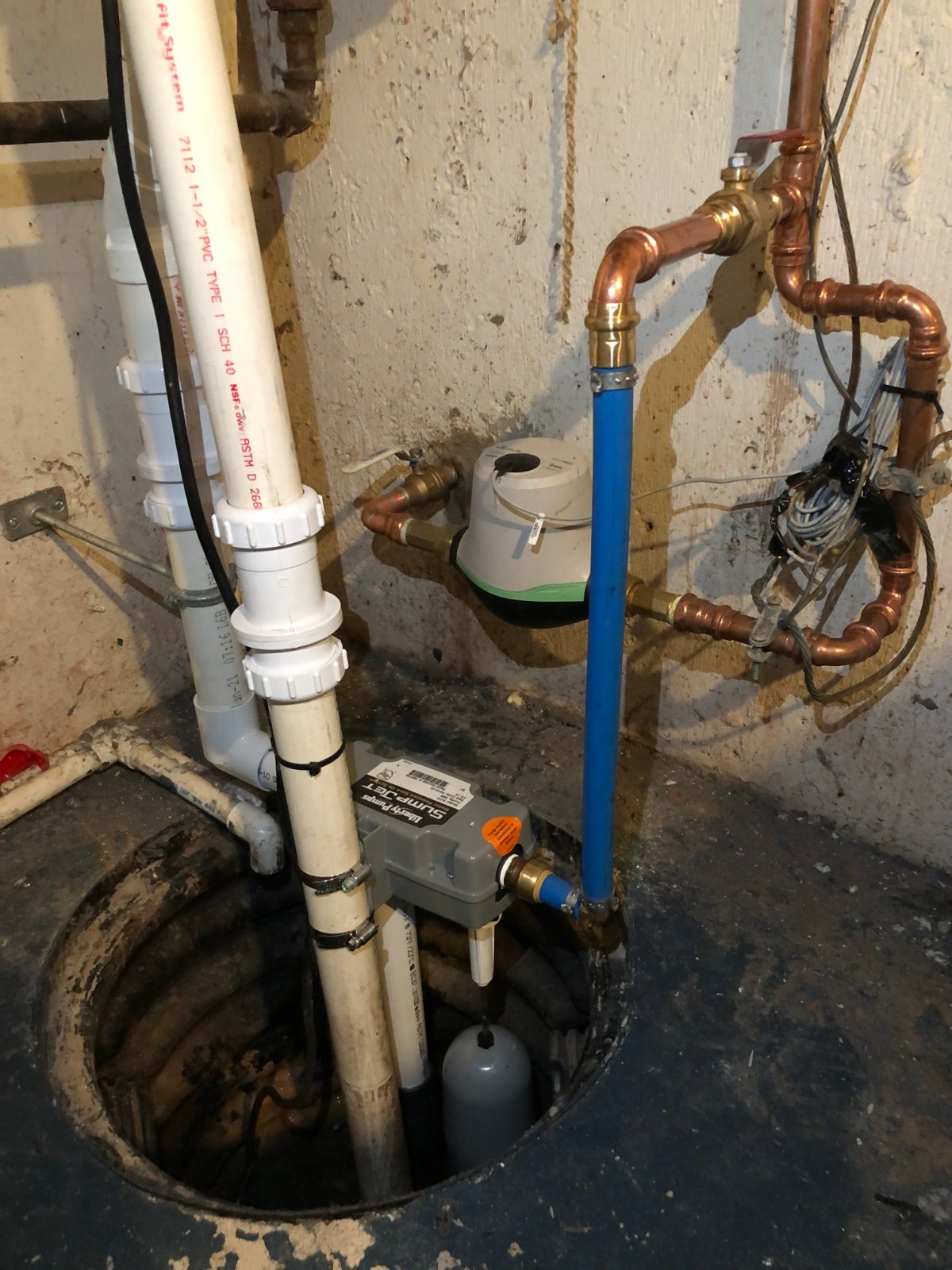
Before storm season, work through this checklist:
- Clean the pump intake and pit, and verify the float switch moves freely.
- Test the pump by adding water until it activates.
- Check the discharge pipe, check valve, alarm, electrical receptacle, and exterior outlet.
- Consider a properly sized secondary pump, high-water alarm, and battery backup or generator. A generator must never be back-fed directly into house wiring — use a proper transfer setup.
- Route discharge away from the foundation, and don't connect it to a sanitary sewer unless your local utility expressly allows and approves it — local rules vary on discharge to storm sewers, streets, ditches, or neighboring property.
A sump system is generally designed to collect groundwater — it is not designed to keep up with surface floodwater.
In Illinois winters, exposed discharge lines can freeze and block the pump. Use a manufacturer-approved freeze-guard arrangement and inspect the line after hard freezes.
Pump sizing, backup technology, discharge routing, check-valve use, and freeze protection all depend on the manufacturer, your foundation drainage design, soil, elevation, and local requirements — there is no single, universal Illinois rule for any of these.
Gutters, downspouts, and grading

- Clean gutters at least in spring and fall, and after major storms.
- Extend downspouts so roof water discharges away from the foundation.
- Keep soil and paving sloped away from the house, but avoid regrading in a way that sends water toward a neighbor, sidewalk, roadway, ditch, or drainage easement.
- Keep window wells, area drains, swales, and drainage channels clear.
- Before adding fill, berms, retaining walls, French drains, or major regrading, contact the local building, engineering, zoning, and floodplain offices — permits and drainage restrictions vary by municipality.
Sewer backups, backwater valves, and sewer laterals
A backwater or check valve, or an overhead sewer, may reduce sewer-backup risk, but it has to be selected and maintained for your specific plumbing layout — an incorrectly installed valve can trap discharge or create new problems. Consult a licensed plumber and your local sewer utility before installing one.
Illinois does not have a single, statewide rule assigning sewer-lateral maintenance to homeowners. Responsibility can depend on the municipality, utility tariff, easements, plumbing configuration, and where a blockage is located. Ask your local sewer utility:
- Where public ownership ends and private lateral responsibility begins.
- Whether private sewer-lateral inspection, lining, repair, or backwater-valve permits are required.
- Whether basement floor drains, sump pumps, and downspouts may connect to the sanitary or combined sewer.
- Whether the utility offers inspection, disconnection, or cost-sharing programs.
Flood insurance and FEMA map limitations
- Most homeowners insurance policies do not cover flood damage; separate flood insurance may be available through the National Flood Insurance Program (NFIP) or a private insurer.
- NFIP basement coverage is generally limited to specified building systems and cleanup — finished walls, carpeting, furniture, and many basement contents may not be covered.
- Sewer backup or sump discharge may be covered under an NFIP policy only when a qualifying general flood is the proximate cause; ordinary plumbing backup or an isolated sump failure may be excluded. Policy terms and private sewer-backup endorsements vary by insurer.
- FEMA flood maps show mapped, regulatory flood risk — they are not a guarantee of safety outside a mapped high-risk zone. Local drainage, intense rainfall, groundwater, and sewer surcharge can still affect a basement anywhere.
Ask your insurer directly about flood, sewer-backup, sump-pump, mold, contents, basement-finish, and additional-living-expense coverage — deductibles, exclusions, waiting periods, and sublimits vary by insurer and policy.
Illinois floodplain and construction cautions
Before filling, grading, building, remodeling, installing barriers, altering drainage, or finishing a basement:
- Check the FEMA flood map and contact your local floodplain administrator.
- Ask the municipality whether local floodplain, stormwater, zoning, building, plumbing, or electrical permits apply.
- Ask the Illinois Department of Natural Resources / Office of Water Resources whether the work is in a regulated floodway or otherwise requires state authorization.
- Don't assume a "minor" project is exempt — floodway work may require prior approval, and local floodplain rules commonly apply on top of that.
For addresses where permit jurisdiction isn't clear, the Illinois Permit Finder can help identify the likely local permit authority to contact.
Basement finishing and materials
Correct leaks, seepage, drainage, radon, ventilation, and combustion-safety problems before finishing a basement. Avoid carpet in chronically damp areas, since moisture can move through or condense on a concrete slab. Prefer materials and assemblies that can be removed, dried, and cleaned, and keep critical electrical, HVAC, and water-heating equipment elevated where feasible.
Material choices depend on the foundation, slab, vapor-control design, flood exposure, local code, and insurer requirements — there is no single approach that applies to every Illinois basement. Obtain required inspections before covering plumbing or electrical work, and check your radon level before finishing a space you plan to occupy regularly.
Documentation and insurance sequence
Before cleanup begins, if it's safe to do so:
- Photograph or video every room, water line, entry point, damaged item, appliance, foundation crack, sump, and exterior drainage condition.
- Record the date, time, weather warnings, water depth, odor/color, utility outages, and suspected source.
- Keep damaged materials and receipts unless unsafe or your insurer/adjuster authorizes disposal.
- Notify your insurer promptly and ask for written instructions.
- Keep plumber, electrician, mitigation, mold, and structural reports, plus permits and inspection records.
- Photograph serial numbers and maintain an inventory of basement contents.
Seasonal Illinois checklist
Spring
- Clean gutters and downspouts; inspect grading, window wells, sump discharge, and foundation cracks
- Test the primary pump, backup pump, alarm, battery, and generator transfer equipment
- Review floodplain status, insurance coverage, emergency contacts, and NWS alerts
Summer storm season
- Monitor NWS warnings and move valuables and chemicals off the floor
- Keep a wet/dry vacuum, boots, gloves, respirators, disinfectant, flashlights, and batteries on hand
- Never drive or walk through moving or unknown-depth water
Fall
- Repeat gutter and downspout cleaning
- Inspect discharge lines and protect exposed piping against freezing
- Service furnaces, test carbon monoxide alarms, and verify gas shutoff information
Winter
- Keep the house heated and inspect sump discharge after hard freezes
- Never thaw frozen pipes with an open flame
- If leaving for an extended period, arrange regular checks or properly winterize utilities
Frequently asked questions
Sources
- Illinois Ready — Floods
- Illinois Ready — Electric
- Illinois Ready — Gas
- Illinois DNR — Guide To Floodproofing
- Illinois DNR — Permit Program
- Illinois DPH — Cleaning Up After Flood and Sewer Overflows
- Illinois DPH — Mold Frequently Asked Questions
- U.S. EPA — What Are the Main Ways to Control Moisture in Your Home?
- U.S. EPA — Remodeling Your Home and Indoor Air Quality
- CDC — Safety Guidelines: Reentering Your Flooded Home
- National Weather Service — Flood Related Hazards
- FloodSmart / NFIP — What Is My Flood Zone?
- FEMA / NFIP — What Does Flood Insurance Cover in a Basement?
This guide is general education, not professional, engineering, legal, or insurance advice, and it does not certify or guarantee the safety, dryness, or code compliance of any home. For an active emergency, call 911 first.